Popular Searches

Gold CIL PROCESSING PLANT ,GOLD CIP PROCESSING PLANT

What is the basic processing steps for Gold processing plant ?Crushing & ScreeningGoal:Reduce large mined rocks to a manageable size for grinding.Equipment:Typically involves multiple stages. Primary crushing often usesJaw Crushers.

Input Size
300 mm
Capacity
100-1200 tpd
Type
CIL/CIP (for fine leachable gold), Heap Leaching (low-grade oxides), Gravity Concentration (coarse g
Gold CIL PROCESSING PLANT ,GOLD CIP PROCESSING PLANT

Introduction

What is the basic processing steps for Gold processing plant ?

Crushing & Screening

  • Goal: Reduce large mined rocks to a manageable size for grinding.

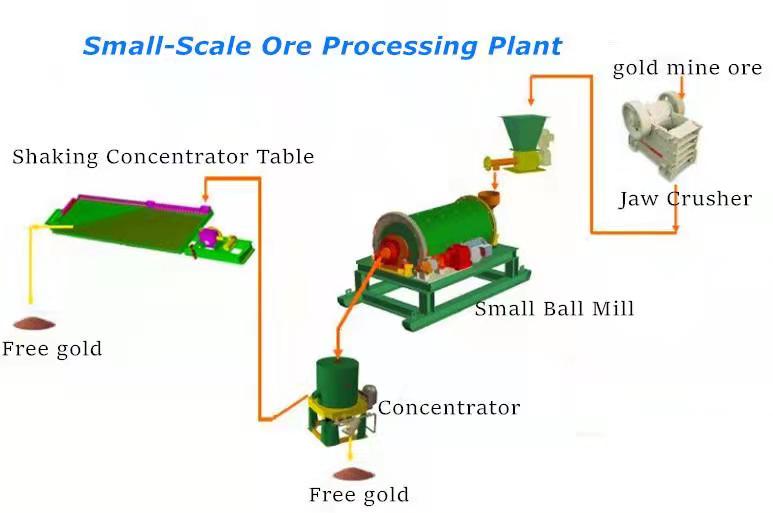
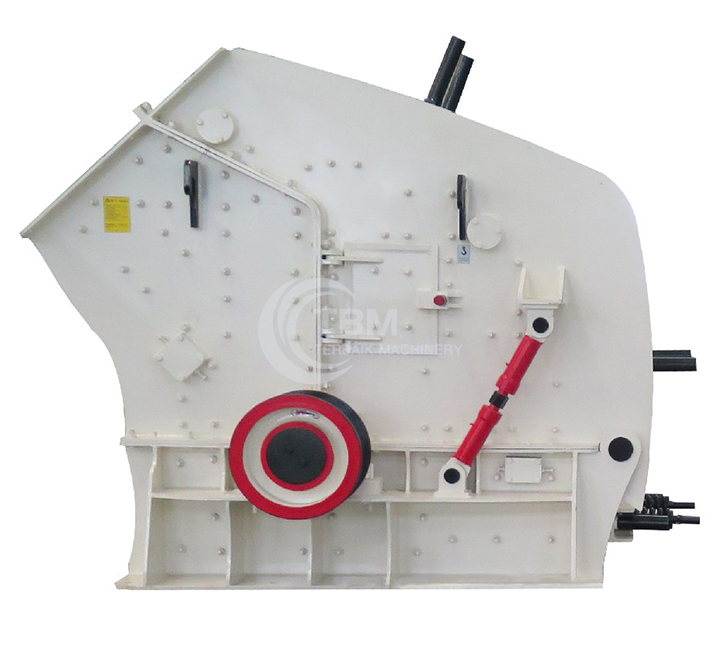
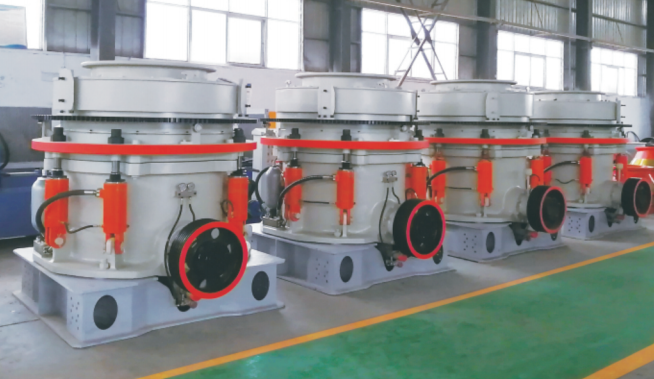
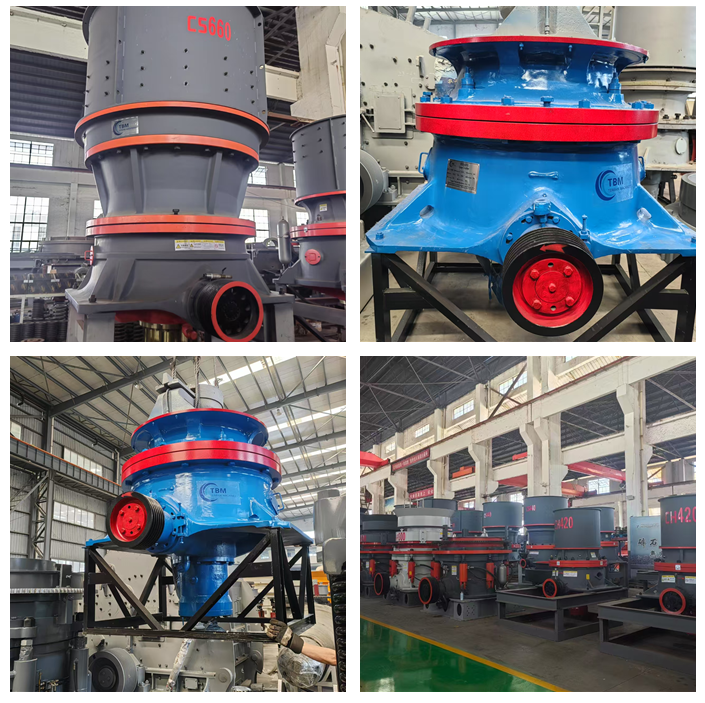
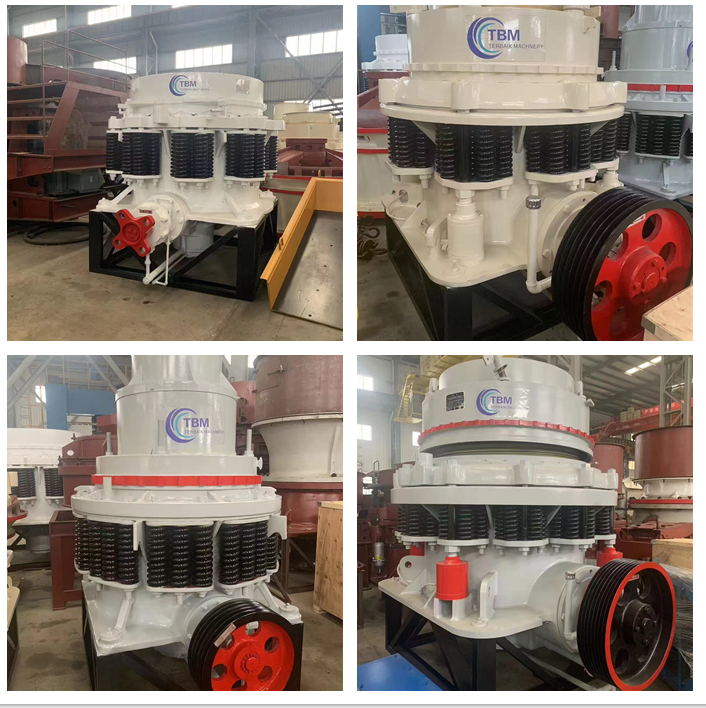
  • Equipment: Typically involves multiple stages. Primary crushing often uses Jaw Crushers. Secondary and Tertiary crushing use Cone Crushers or Impact Crushers, working with Vibrating Screens to classify sizes and send oversized material back for more crushing. ZONEDING provides a full range of these crushers and screens.

Grinding & Classification

  • Goal: Liberate fine gold particles from the host rock by grinding the ore into a slurry.

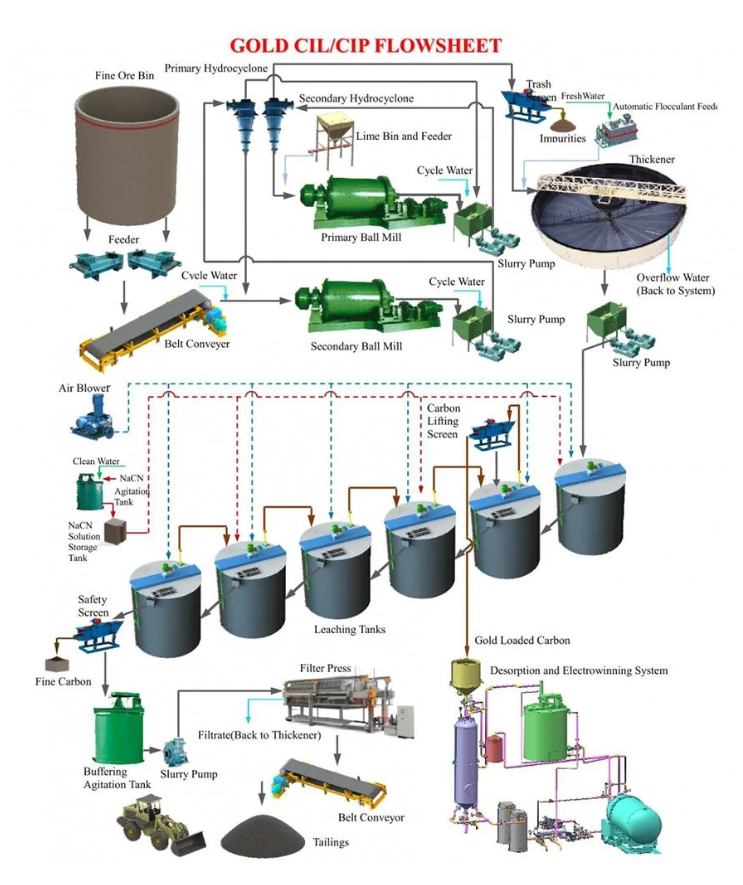
  • Equipment: Ball Mills or Rod Mills are commonly used. They work in closed circuit with Hydrocyclones (or screens), which classify the slurry. Undersized particles (fine enough) proceed to leaching; oversized particles are returned to the mill for further grinding.

(Optional) Pre-treatment

  • Goal: Address refractory ores (gold locked in sulfides or carbonaceous material) that don’t leach well directly.

  • Equipment: May include Roasting furnaces, Pressure Oxidation (POX) autoclaves, or Ultra-Fine Grinding (UFG) mills.

Leaching & Adsorption (CIL)

  • Goal: Dissolve gold into a cyanide solution and capture it onto activated carbon.

  • Equipment: A series of large, agitated Leach Tanks where ore slurry is mixed with cyanide and air (oxygen). Activated carbon is added and moves counter-current to the slurry flow through Interstage Screens, adsorbing the dissolved gold.

Carbon Management is Crucial (Insight!)

  • Insight: The carbon circuit requires meticulous management. Issues like carbon fines generation (loss of gold), poor screening (inefficiency), incomplete elution (gold recycle), or carbon fouling reduce recovery. Proper carbon selection, regeneration, and screen maintenance are vital.

Gold Recovery & Refining

  • Elution (Stripping): Loaded carbon is removed, and gold is stripped off using a hot caustic/cyanide solution in an Elution Column.

  • Electrowinning: Gold is recovered from the rich elution solution onto cathodes (steel wool) in Electrowinning Cells.

  • Smelting: Gold sludge from the cathodes is dried, mixed with fluxes, and melted in a Furnace to produce doré bars (a semi-pure alloy of gold and silver).

Tailings & Water Management

  • Goal: Safely dispose of waste slurry (tailings) and recycle process water.

  • Equipment: Thickeners (to recover water), Filters (further dewatering), Tailings Storage Facility (TSF or tailings dam), Cyanide Destruction circuit (to treat effluent before discharge/recycle), Water Treatment Plant.


Advantages of

What is the gold processing plant target ? 

The primary objective is concentration and purification. Mined ore might contain only a few grams of gold per tonne (g/t). The plant concentrates this significantly, producing a final product (like doré bars) that can be easily transported and sold to refineries for further purification into pure gold bullion. Without the processing plant, the mined rock has little economic value. It transforms raw geological resources into tradable commodities.

How to Chose a suitable Gold processing plant ?

Detailed ore testing (mineralogy, metallurgical tests) is crucial. It reveals gold’s form (free, locked, refractory), particle size, associated minerals, and how it responds to different recovery methods, directly guiding flowsheet selection.

1. Mineralogy: Identifying all minerals present, their proportions, and textures. Crucially, understanding how gold occurs (its “deportment”).

Metallurgical Testing (Process Amenability): Lab and pilot-scale tests simulating different processing routes (gravity, flotation, leaching) to determine the best recovery method, reagent consumptions, and achievable recovery rates.

2.Key Ore Properties

Gold Deportment: Is the gold present as free-milling native gold? Is it finely disseminated within sulfides (like pyrite or arsenopyrite)? Is it locked within silica? Is it chemically combined (tellurides)? This dictates the processing complexity.

3. Particle Size: The size of the gold grains determines the required grinding fineness for liberation. Coarse gold might suit gravity recovery.

Ore Type: Is it easily leached oxide ore? Or refractory sulfide ore needing pre-treatment (like roasting or pressure oxidation)? Is it alluvial (placer) requiring washing and gravity methods? Are there troublesome elements like arsenic or carbon (preg-robbing)?

4.Understanding Liberation & Variability

Liberation vs. P80: Simply grinding to a target size (e.g., P80 passing 75 microns) isn’t enough. Insight: Detailed mineralogy reveals if the gold is actually freed in a recoverable form at that grind, or if it remains locked. Designing based only on P80 can lead to poor recovery if liberation isn’t understood.

5.Handling Ore Variability:

Test work often uses averages. Insight: Real ore feed varies daily. A robust plant must be designed with flexibility to handle expected variations in grade, hardness, mineralogy, and clay content, not just the average. Designing only for the average courts failure.

6. Byproduct Value

Does the ore contain significant silver, copper, lead, or zinc? A comprehensive testing program will identify these, allowing the design to incorporate circuits for their recovery, adding potential revenue streams.

CIL/CIP: The Workhorse

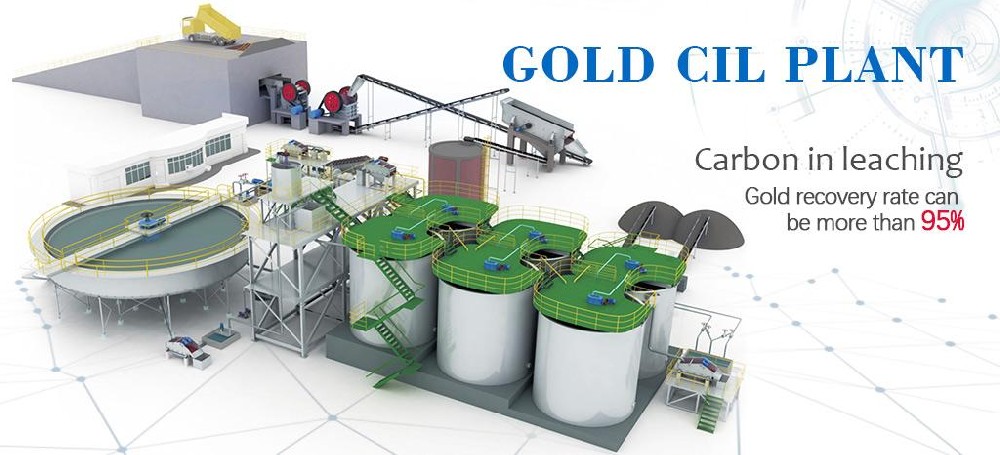
  • Carbon-in-Leach (CIL) / Carbon-in-Pulp (CIP): Gold is leached using cyanide solution, and simultaneously (CIL) or subsequently (CIP) adsorbed onto activated carbon.

  • Best For: Ores where gold is finely disseminated and readily leachable after grinding. Widely used for its efficiency.

  • Pros: High recovery for suitable ores, well-established technology.

  • Cons: Requires significant capital investment, uses cyanide, less effective for very coarse gold or some refractory ores.
  • Gold CIL PROCESSING PLANT ,GOLD CIP PROCESSING PLANT(图1)

Product Features

Adjustable Discharge

Hydraulic system adjusts discharge opening to control product size

Wide Size Range

Produces 3-50mm aggregates in various specifications

Excellent Shape

Cubical shape for high-quality aggregates

Auto Control

PLC control system for automated operation

Working principle

Heap Leaching: Low-Grade Solution

Gold CIL PROCESSING PLANT ,GOLD CIP PROCESSING PLANT(图1)

Solutions

Mobile Crushing
  • Crawler Jaw Mobile Plant
  • Crawler Cone Mobile Plant
  • Crawler Screen Mobile Plant
  • Mobile Feeder

Suitable for: Quarries, mining, construction waste recycling

Stationary Crushing
  • Jaw Crusher
  • Cone Crusher
  • Vibrating Feeder
  • Vibrating Screen

Suitable for: Large quarries, cement plants, highways

Sand Making Line
  • VSI Impact Crusher
  • Sand Washing Machine
  • Dewatering Screen
  • Fine Sand Recovery

Suitable for: High-quality sand, concrete batching plants

Technical Specifications

Gravity Concentration: Early Gold Wins (Insight!)

  • Process: Uses density differences to separate heavy free gold particles from lighter gangue minerals. Devices include jigs, spirals, shaking tables, and centrifugal concentrators (e.g., Knelson, Falcon).

  • Best For: Ores containing coarse or relatively coarse free gold.

  • Insight: Often underestimated, implementing efficient gravity recovery early (e.g., in the grinding circuit) can recover 20-70%+ of gold cheaply and quickly, reducing load on downstream circuits like CIL/CIP and providing rapid cash flow. It’s often the lowest-cost gold recovery method.

Gold CIL PROCESSING PLANT ,GOLD CIP PROCESSING PLANT(图1)

Frequently Asked Questions

We are factory.

7-10 days for the stock.15-30 days for the mass production.

30% deposit in TT advance, 70% balance before shipment.

One year. Spare parts for you at lowest cost.

Yes, we can help you set up a complete production line and give you related professional advice. Wehad already build many mining projects in China & Overseas.

Related Products

Send Inquiry